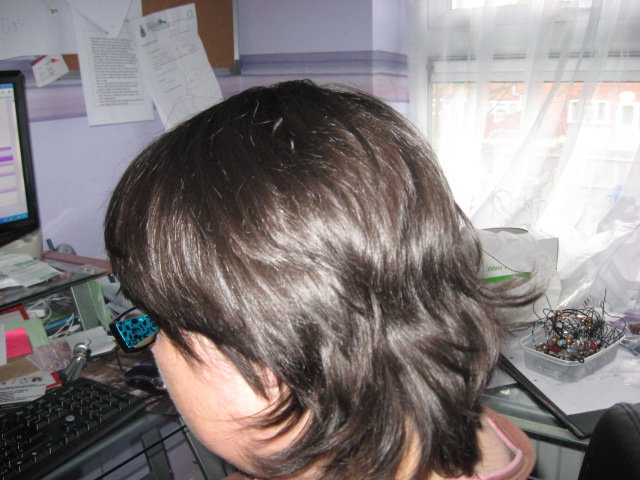
Henna/cassia 50/50 mix. Left on for about 3 hours. Dyed my hair on Sunday, so it's had a few days to mellow out a bit.
Love the vibrancy and healthy shine that my hair has. Still haven't had it cut, so close to a year now without even a trim.
Helen
xxx
Friday, 27 August 2010
Saturday, 21 August 2010
Reetha Powder/ Soap Nuts- nature's all purpose cleanser
REETHA, the Soap nut tree, grows abundantly in India. Its fruit has been used for cleaning hair, body and clothes since ancient times. Soap nuts are 100% natural and contain no chemical additives, making them a great choice for anyone with sensitive skin. They work like soap because their shell contains a substance called "saponin" which is released when it comes in contact with warm water. The inner seed is hard and black and contains no saponin.
Reetha or soap nuts can be used whole or in powdered form in many ways:
1)Use whole or cracked soap nuts to wash clothes in the washing machine instead of detergent and fabric conditioner. Most soap nuts are sold after the shell has been cracked and the seed discarded. I find using whole soap nuts (including seeds) more effective in the washing machine as the friction created by the whole seed probably goes some way towards cleaning the clothes and they can be reused 5-6 times before being composted. There is no need for fabric conditioner as garments are fresh smelling, clean and remarkably soft but essential oils can be added to the conditioner drawer. They are hugely economical and also eco-friendly as there are no chemicals going down the drain. With adapted plumbing, this grey water could be used in the garden or such.
2)When the soap nuts become dark and soggy( usually after 5-6 washes), you've extracted most of the saponin so stop using them in the washing machine. You could still soak them (excluding seeds) in a bit of water, whizz them in the blender, strain and use as 'liquid soap’ for the hand basin.
3)DIY soap nut liquid is very easy to make and has multiple uses for a truly natural way of living. This liquid can be used as shampoo, face and body wash, laundry detergent, all purpose cleaner, car wash, liquid soap, pet shampoo, washing up liquid as it is suitable for every kind of cleaning. A mixture of soap nut liquid and vinegar (ratio of 2:3) makes a great window cleaner. This recipe will make approximately 1.25 litres of Soap nut liquid.
Instructions:
Take approximately 1 litre of water in a saucepan and add about 50g (handful) of new soap nuts (excluding seeds). Cover and boil, then simmer for approximately 30 minutes. The boiling process extracts the saponin from the nut shells and combines with the water to make a liquid cleanser. Let the infusion steep overnight and strain into an appropriate container.
You could experiment by changing the soap nut shell to water ratio to alter the concentration depending on its use and adding essential oil if appropriate. A longer cooking time will make the liquid more concentrated.
4)Reetha powder mixed to a paste with water is an effective hair shampoo. As there are no chemical foaming agents added, it does not lather but cleans thoroughly and hair feels thicker and shinier. It is reputed to reduce dandruff and prevent hair loss. The longer you use the powder to wash your hair, the less you will need to use as the residual chemicals are removed.
5)The same paste can also be used as a face and body wash. The skin is left soft, smooth and resistant to infections and insect bites. The powder also has a deodorizing effect and is meant to reduce psoriasis, eczema and other skin conditions.
Some interesting facts: In India, Reetha is cherished not just for its mild, anti-parasitic detergent effect but also for its anti-venom properties. It is commonly believed among paddy growers that the presence of this tree repels venomous snakes, not all snakes, as non-venomous snakes are essential to protect the crop from rats. In case of snake bite, sipping the juice of Reetha fruits and applying it inside the eyes is meant to help expel the venom. Reetha has formic acid which is an irritant so it is mixed with cow's ghee before using in the eyes. In case of scorpion bite, the patient is fed Reetha juice mixed with jaggery (sugarcane extract) to combat its extreme bitterness. Another documented use of Reetha is to smoke it instead of tobacco for a few weeks in order to reduce the craving for tobacco. A very small quantity is used by goldsmiths for washing gold and silver ornament.
Available from LoveHennaHair
Jyoti
Reetha or soap nuts can be used whole or in powdered form in many ways:
1)Use whole or cracked soap nuts to wash clothes in the washing machine instead of detergent and fabric conditioner. Most soap nuts are sold after the shell has been cracked and the seed discarded. I find using whole soap nuts (including seeds) more effective in the washing machine as the friction created by the whole seed probably goes some way towards cleaning the clothes and they can be reused 5-6 times before being composted. There is no need for fabric conditioner as garments are fresh smelling, clean and remarkably soft but essential oils can be added to the conditioner drawer. They are hugely economical and also eco-friendly as there are no chemicals going down the drain. With adapted plumbing, this grey water could be used in the garden or such.
2)When the soap nuts become dark and soggy( usually after 5-6 washes), you've extracted most of the saponin so stop using them in the washing machine. You could still soak them (excluding seeds) in a bit of water, whizz them in the blender, strain and use as 'liquid soap’ for the hand basin.
3)DIY soap nut liquid is very easy to make and has multiple uses for a truly natural way of living. This liquid can be used as shampoo, face and body wash, laundry detergent, all purpose cleaner, car wash, liquid soap, pet shampoo, washing up liquid as it is suitable for every kind of cleaning. A mixture of soap nut liquid and vinegar (ratio of 2:3) makes a great window cleaner. This recipe will make approximately 1.25 litres of Soap nut liquid.
Instructions:
Take approximately 1 litre of water in a saucepan and add about 50g (handful) of new soap nuts (excluding seeds). Cover and boil, then simmer for approximately 30 minutes. The boiling process extracts the saponin from the nut shells and combines with the water to make a liquid cleanser. Let the infusion steep overnight and strain into an appropriate container.
You could experiment by changing the soap nut shell to water ratio to alter the concentration depending on its use and adding essential oil if appropriate. A longer cooking time will make the liquid more concentrated.
4)Reetha powder mixed to a paste with water is an effective hair shampoo. As there are no chemical foaming agents added, it does not lather but cleans thoroughly and hair feels thicker and shinier. It is reputed to reduce dandruff and prevent hair loss. The longer you use the powder to wash your hair, the less you will need to use as the residual chemicals are removed.
5)The same paste can also be used as a face and body wash. The skin is left soft, smooth and resistant to infections and insect bites. The powder also has a deodorizing effect and is meant to reduce psoriasis, eczema and other skin conditions.
Some interesting facts: In India, Reetha is cherished not just for its mild, anti-parasitic detergent effect but also for its anti-venom properties. It is commonly believed among paddy growers that the presence of this tree repels venomous snakes, not all snakes, as non-venomous snakes are essential to protect the crop from rats. In case of snake bite, sipping the juice of Reetha fruits and applying it inside the eyes is meant to help expel the venom. Reetha has formic acid which is an irritant so it is mixed with cow's ghee before using in the eyes. In case of scorpion bite, the patient is fed Reetha juice mixed with jaggery (sugarcane extract) to combat its extreme bitterness. Another documented use of Reetha is to smoke it instead of tobacco for a few weeks in order to reduce the craving for tobacco. A very small quantity is used by goldsmiths for washing gold and silver ornament.
Available from LoveHennaHair
Jyoti
Tuesday, 17 August 2010
Shikakai
Until a few years back, when shops were not packed with fancy haircare products, most Indian homes were filled with the fragrance of a black concoction every morning. This was when reetha (soapnut), soaked overnight, was blended with shikakai powder to make a 100% natural shampoo and body wash.
Reetha and Shikakai contain all the required goodness for healthy lustrous hair. Shikakai, which means ‘fruit for hair’, is a gentle herb, native to southern India. It is extremely mild and doesn't strip hair of natural oils making it ideal for those with sensitive scalps. It is probably nature's original pH balanced shampoo which removes dirt and keeps hair free of fungal infections by detoxifying the blood in the scalp and preventing premature greying of hair. It is a natural conditioner since it also detangles hair. Shikakai contains 100 times more vitamin C than grapefruit as well as abundant antioxidants such as vitamins A, D, E and K that promote healthy hair growth.
I have just returned from a trip to India and used this trip to brush up on my knowledge of the traditional natural recipes used by folks back home. One of the most popular homemade reetha-shikakai hairpacks is to mix two parts of reetha with one part of shikakai, adding half-a-cup of fenugreek (methi) seeds into this mixture. If possible, add dried hibiscus leaves too. Make a powder or grind the paste of fresh leaves. Wash and rinse hair thoroughly with this paste.
Jyoti
Reetha and Shikakai contain all the required goodness for healthy lustrous hair. Shikakai, which means ‘fruit for hair’, is a gentle herb, native to southern India. It is extremely mild and doesn't strip hair of natural oils making it ideal for those with sensitive scalps. It is probably nature's original pH balanced shampoo which removes dirt and keeps hair free of fungal infections by detoxifying the blood in the scalp and preventing premature greying of hair. It is a natural conditioner since it also detangles hair. Shikakai contains 100 times more vitamin C than grapefruit as well as abundant antioxidants such as vitamins A, D, E and K that promote healthy hair growth.
I have just returned from a trip to India and used this trip to brush up on my knowledge of the traditional natural recipes used by folks back home. One of the most popular homemade reetha-shikakai hairpacks is to mix two parts of reetha with one part of shikakai, adding half-a-cup of fenugreek (methi) seeds into this mixture. If possible, add dried hibiscus leaves too. Make a powder or grind the paste of fresh leaves. Wash and rinse hair thoroughly with this paste.
Jyoti
Thursday, 6 May 2010
Before and After Henna: Vickie
My friend Vickie has tried henna and is loving the results.
Here's a pic of her hair before henna (with a few grey strands):

and here is her softer, NO Grey hair:

Vickie is loving the condition of her newly-treated hair. She says it feel and looks softer and seems to be in better condition than before henna treatment.
xxx
Here's a pic of her hair before henna (with a few grey strands):

and here is her softer, NO Grey hair:

Vickie is loving the condition of her newly-treated hair. She says it feel and looks softer and seems to be in better condition than before henna treatment.
xxx
Monday, 5 April 2010
Latest hair colour pic
I used 100g of pure henna and left on for just under 2 hours.
The final effect...

This is about 4 hours after I finished rinsing the henna out. It will settle down over the next few days and become deeper and richer.
I still haven't had it cut since September and it is starting to look slightly tatty on the very ends. But definitely not as bad as you would expect for 8 months growth.
The final effect...
This is about 4 hours after I finished rinsing the henna out. It will settle down over the next few days and become deeper and richer.
I still haven't had it cut since September and it is starting to look slightly tatty on the very ends. But definitely not as bad as you would expect for 8 months growth.
Friday, 12 February 2010
Helen's Hair
In February ~ about 3 weeks after an application of Red Hair Mix. Left on my hair for about 2 hours.

I think it's looking really healthy. Haven't had my hair cut since September 2009, I think it was, and I have very few dead ends.
xxx
I think it's looking really healthy. Haven't had my hair cut since September 2009, I think it was, and I have very few dead ends.
xxx
Monday, 4 January 2010
Subscribe to:
Posts (Atom)